Devon Hartmann · 2 September 2026
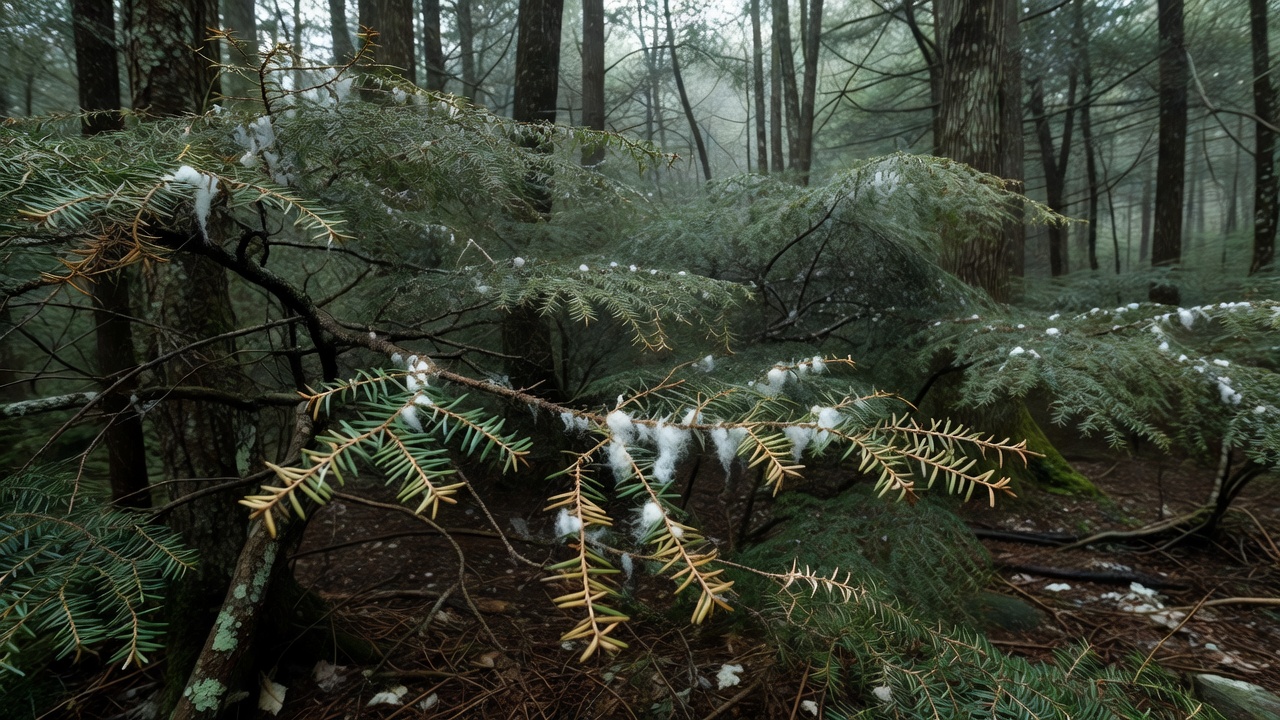
The hemlock woolly adelgid continues its northward expansion through woodlots in the northeastern United States, placing eastern hemlock stands under severe stress. This invasive insect from Asia feeds on tree sap at the base of needles, leading to premature needle drop, branch dieback and eventual tree mortality within four to ten years. Hemlocks play a critical role in woodlot ecology by moderating soil temperatures, stabilizing stream banks and supporting specialized wildlife, so their widespread loss threatens both biodiversity and long-term forest productivity.
Monitoring Spread and Early Detection
State forestry agencies report new infestations in previously unaffected counties of Maine, New Hampshire and Vermont, aided by milder winters that reduce natural mortality of the adelgid. The white woolly egg masses are most visible from late fall through early spring, allowing landowners to conduct systematic inspections on the undersides of branches. Movement of infested nursery stock and firewood accelerates dispersal, prompting recommendations to source local plant material and burn wood on site. Early detection enables targeted intervention before populations reach damaging levels, preserving the structural integrity of mixed hardwood-conifer woodlots.
Integrated Management for Sustainable Forestry
Woodlot owners are advised to diversify species composition by favoring native pines, oaks and maples in future plantings to reduce dependence on hemlock. Release of host-specific predatory beetles offers a biological control option suitable for larger areas where chemical treatment is impractical. Selective removal of heavily infested trees combined with retention of resistant individuals can slow spread while maintaining canopy cover. Extension services provide training on integrated pest management that balances ecological protection with economic viability, emphasizing regular scouting and record keeping. Ongoing research into naturally resistant hemlock genotypes supports long-term restoration goals within sustainable woodlot systems.
Collective action among private landowners, agencies and researchers remains essential to limit further damage and maintain the ecological services provided by northern hemlock forests.